
From hackathon to published exhibition
In November 2025, BonoLab and partners hosted DigiBlue DigiEduHack, a transnational learning activity that brought together young people, educators, mentors, and local partners around blue citizenship and digital storytelling. What began as a hackathon has since become a published online exhibition and an initiative with plans to grow into a yearly youth engagement event.
A learning journey, not only an event
DigiBlue was designed as more than a single weekend activity. Before the hackathon, organisers developed and shared onboarding materials on blue citizenship, storytelling, collaboration and digital tools, and organised information meetings, webinars and local engagement activities. This gave participants time to prepare, build confidence and develop ideas before entering the co-creation phase.
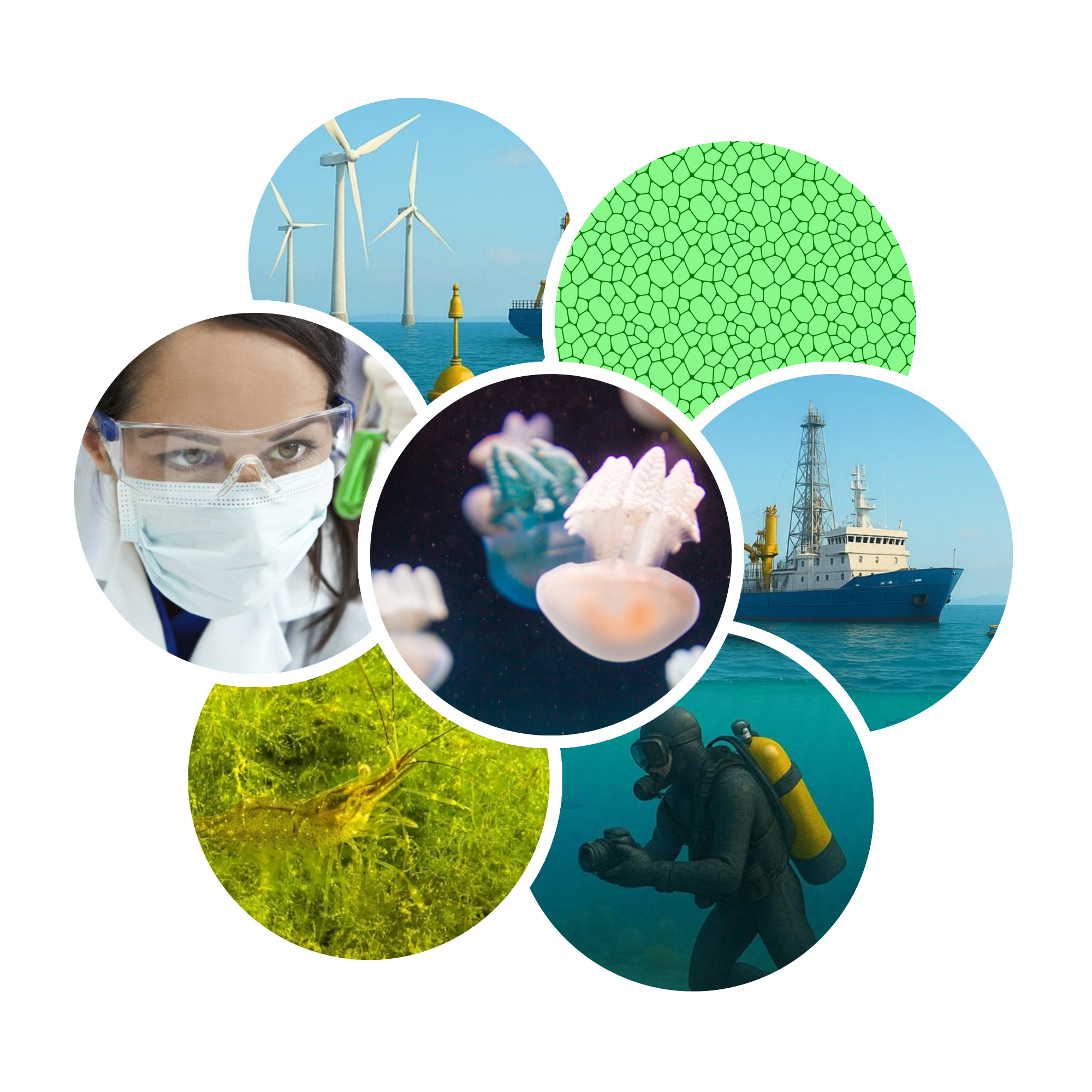
The initiative engaged over 180 individuals, including youth participants, educators, experts and citizens. The youth joined the hackathon to co-create digital story concepts about blue citizenship. 12 digital story concepts were submitted during the weekend. Several stories continued to develop after the event and were later included in the online exhibition, extending the project’s life beyond the hackathon itself.
The supporting course materials have now been published as a self-paced course for future use: Digital Storytelling for Blue Citizenship | BonoLab
Partners made the project local and concrete
A big part of DigiBlue’s strength came from its partner network. BonoLab worked with collaborators across Denmark, Estonia, Poland and Sweden, including the Den Levende Fiskerihavn, ivandet, Baltic Living Lab.org, Estonian Business School, Københavns Universitet – University of Copenhagen, Edu Tech Impact, Gdynia Aquarium, Marine Education Center in Malmö, Superhuman with Grammarly, and others. These partners helped connect the project to schools, local communities, research environments and place-based learning contexts across the Baltic region.
Their contribution was not only organisational. Partners helped create the local conditions that made participation possible, from school outreach and community engagement to in-person activity points and follow-up exhibition plans. The project partners took on local pop-up exhibition activities at locations such as Rødby Havn, Gdynia, Malmö, Tejn and Tallinn, at times most relevant to their contexts.
Along the way, two other collaborators joined in.
Firstly, the North-South Centre of the Council of Europe and HEY tutor Carlota Nzang from Equatorial Guinea supported us with additional course content on storytelling. Carlota shared practical advice for speaking up in ways that build understanding — not conflict. This video has been seen by over 4400 viewers since its publication.
Secondly, we were very happy to host a webinar with Georgia Holly from the NGO SeaVoice. She was very kind to share her tips and tricks on how SeaVoice plans, designs, and shares its digital stories about coastal communities. The webinar included practical examples and a short on-the-spot assignment to test her approach. The webinar is available for viewing on BonoLab’s Youtube: Digital Storytelling with Gloria Holly from SeaVoice.
Mentors helped shape the stories
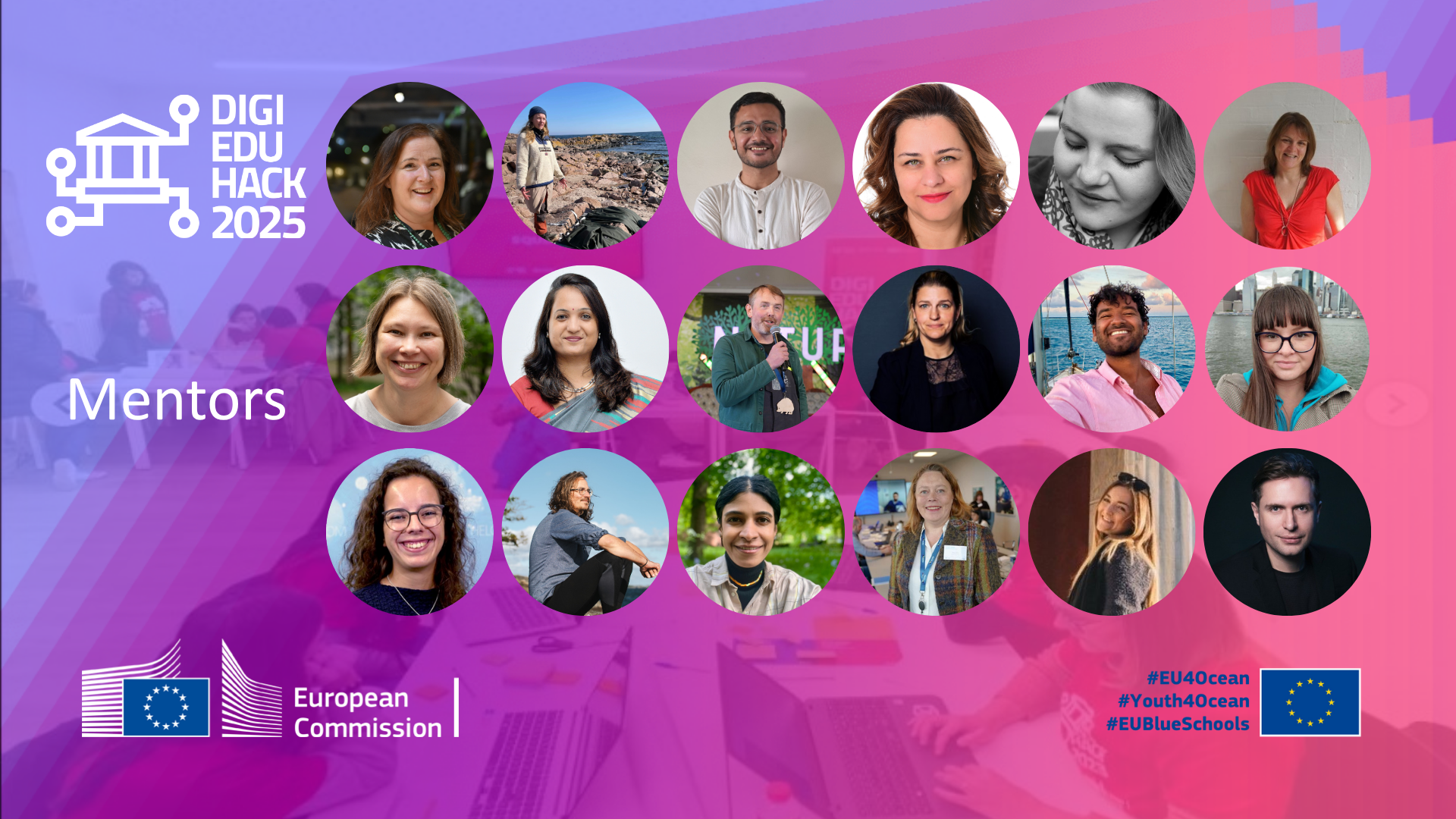
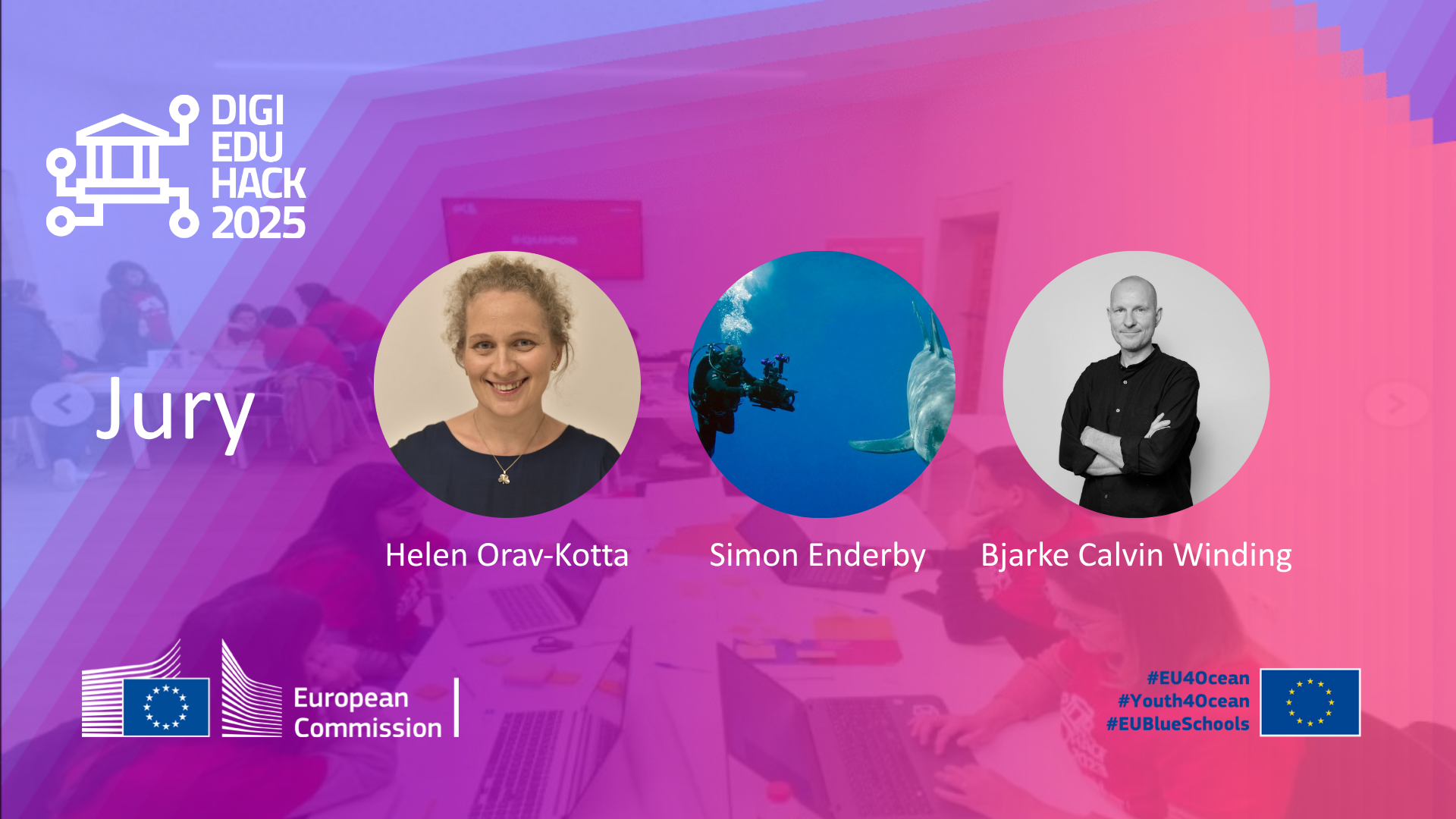
The mentor dimension was another important part of the project. BonoLab brought in mentors and jury members with experience in marine science, education, communication, youth engagement and digital storytelling to support participants during the hackathon. On the published project update, BonoLab introduced mentors including Jamileh Javidpour, Christine Nikander, Hira Wajahat Malik, Marie Helene Birk, Tove Holm, Débora Filipa Nobre Carmo, Anu Printsmann, Joel Lindholm, Sakina Sarjan, Dr Savita Sharma, Karadoulama Evdoxia, Michael Magee, Izabela Kotyńska-Zielińska, Dhairya Samirkumar Pandya, Lucie Mockova, Louise Cox, James Ackroys and Mohammed Naushad Khumri. The initial jury included Bjarke Calvin Winding, Helen Orav-Kotta and Simon Enderby, and the final scoring was done by Helen and Simon. Big thank you to all of them for their efforts!
Their role was practical and hands-on. Mentors supported teams with feedback, helped participants sharpen their ideas, and contributed to turning early concepts into clearer and more purposeful digital stories. The mentor feedback was very positive, and several mentors were open to continuing their support beyond the hackathon itself.
What DigiBlue made possible
For BonoLab, DigiBlue is a good example of how project work can be turned into something reusable and accessible. The project combined learning materials, participatory formats, expert guidance and dissemination into one connected process. The result was not only a successful hackathon, but also a collection of stories that now remain available through the published exhibition.
It also showed the value of bringing together partners with different strengths. Some contributed educational and local community connections, others brought research, facilitation or storytelling perspectives, and mentors added expert feedback that strengthened the participants’ work. Together, that made DigiBlue more than a campaign moment. It became a shared learning process with outcomes that can continue to be used, viewed and built on.
Next steps?
BonoLab is continuing the DigiBlue initiative to become a recurring youth engagement effort. In 2026, we are joining Global Education Week organised by the North-South Centre of the Council of Europe. This time, we are preparing an educator package that includes the published course, an invitation to submit virtual stories and connect with global youth via virtual exchanges in the third week of November (as part of the GEW). The package will be published shortly. Anyone can show their interest via this registration form: https://tally.so/r/pbL6vP
About the DigiBlue project
Read our earlier blog post with an in-depth description of the project, partners, goals and desired outcomes We’ve Been Funded! | BonoLab
The project ‘Digiblue DigiEduHack’ is implemented by Bonolab with the support of the EU4Ocean Coalition, funded by the European Commission.
Our dear collaborators are Den Levende Fiskerihavn, ivandet, Baltic Living Lab.org, Estonian Business School, Københavns Universitet – University of Copenhagen, Edu Tech Impact, Gdynia Aquarium, Marine Education Center in Malmö, Superhuman with Grammarly, and others.
DigiEduHack #EU4Ocean #Youth4Ocean EUDigitalEducation FutureOfLearning WeRedefineLearning BlueCitizenship DEAP
Part of the content of the ‘Digital Storytelling for Blue Citizenship’ was realised in collaboration with Georgia Holly from SeaVoice and HEY tutor Carlota Nzang in the context of the Global Education Week campaign of the iLEGEND III Joint programme of the European Union and the Council of Europe: co-funded by the European Union and the Council of Europe and implemented by the North-South Centre of the Council of Europe.
The activities organised in the framework of the Global Education Week are the sole responsibility of the implementers and do not necessarily reflect the views of the European Union or the Council of Europe.
#GlobalEducationWeek #EUDEARProgramme #GEW2025 #iLEGEND